



In this world that requires us to be smart and pure, emotional intelligence appears as a vital bridge connecting our children’s minds and hearts and strengthening their relationships with their social environment. Emotional intelligence is the key to success and achieving balance in life. Developing it in children is a valuable investment that bears long-term results.
In this article, we will present effective steps to develop your child’s emotional intelligence skills and the secrets of transforming their emotional interactions into educational tools that positively impact their life and future relationships.
What Is Emotional Intelligence?
Emotional intelligence is the ability to explore our inner worlds, recognize our own feelings, understand them deeply, regulate and control them, direct them towards a specific goal, and achieve a positive impact in our lives. Emotional intelligence also means empathizing with others. It is the ability to interact with their feelings and provide support and encouragement in their difficult moments.
Thanks to these abilities, emotional communication becomes an effective weapon for building bridges of trust and cooperation and establishing positive relationships that grow and flourish, achieving success and happiness in every aspect of the individual's and others' lives.
What Emotional Intelligence Skills Should Be Taught to Children?
Personal Competence
which includes:
1. Self-awareness
Understanding oneself and one's feelings, abilities, strengths, and weaknesses is the ability to understand oneself. Children need to learn vocabulary for different emotions.
2. Self-regulation
The ability to control emotional reactions and direct them positively, such as the ability to control and express anger appropriately and constructively.
3. Motivation
The ability to motivate oneself and work towards goals with passion and determination. Hope and optimism are basic components of motivation. Teaching them to a child will rid them of depression and fear and make them more successful in school.
Social Competence
which includes:
1. Empathy
Communication skills teach children to understand the feelings of others, see things from their perspective, and act accordingly.
2. Social skills
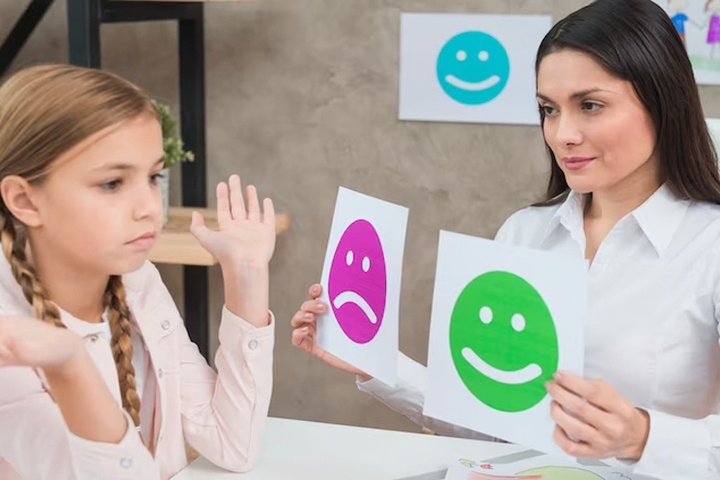
The ability to build and maintain positive relationships and understand how to interact with others. Children acquire these skills through their experiences and attempts. They experience different types of social interactions and discover strategies that bring them success and effectiveness.
When children use verbal and emotional expression in a way that suits the social context or performs their role skillfully and effectively, they understand the methods that contribute to their social success. These continuous experiences can enhance their development and learning in building positive and effective relationships with those around them.
The Importance of Emotional Intelligence
- It contributes to the child’s adaptation to their social surroundings and their environment.
- Training and acquiring emotional intelligence skills contribute to increasing the child’s academic achievement.
- Emotional intelligence contributes to reducing a child's uncontrolled emotions.
- Emotional intelligence enhances a child's self-confidence, which in turn develops their personality and ability to express their needs and opinions with confidence and clarity.
- Emotional intelligence helps the child understand the feelings of others and deal with them correctly.
- Emotional intelligence helps the child eliminate negative emotions such as fear, anxiety, and aggression.
- Emotional intelligence helps children develop leadership and cooperation skills, making them more capable of teamwork and taking responsibility.
- Emotional intelligence helps children reduce the risk of mental health problems. Children with emotional intelligence skills are usually more resilient in dealing with psychological challenges and daily stresses.
- Emotional intelligence helps children stimulate their creativity and innovation. It encourages them to explore new ideas and express themselves in different ways.
How to Develop My Child's Emotional Intelligence Skills?
1. Discussing children about their feelings
An effective way to develop children's emotional intelligence is to actively discuss their feelings and how to express complicated emotions such as anger. You can do the following to make this discussion a success:
- Provide time to talk to the child periodically about their feelings, such as, “How was your day today? Were you happy or sad?”
- Use open questions to describe feelings, such as “What made you feel happy today?”
- Encourage children to talk about their feelings without fear or negative judgment, such as “I understand. Do you want to tell me more about that?” or “Do you want to tell me why you are angry?”
- Encourage children to express their feelings by drawing, writing, or acting. Let the child draw a situation that makes them angry and discuss their feelings afterwards.
- Talk about strategies to calm down. For example, ask them, “What do you think you will do when you feel angry?”
- Encourage children to be patient and listen to their own feelings and the feelings of others.
2. Accepting all of the child’s feelings
You must accept all of the child’s feelings and not belittle any of them. They may feel comfortable and confident when their feelings are respected and accepted. When a child feels sad, angry, or afraid, it is important to understand what they feel without blaming or belittling them, such as saying, “I know you are angry now. Do you want to tell me why?” You should also avoid giving the child negative assessments of their feelings, such as saying, “Sadness is normal. Let’s discuss how we can help you together.”
3. Encouraging the child to establish social relationships with their peers
Establishing social relationships with peers is one of the main ways to develop emotional intelligence in children. Support the child in social activities such as play and group games to enhance cooperation and interaction skills with others. Also, they should be encouraged to join various school or community activities, such as clubs or sports, that strengthen peer relationships.
4. Training the child to name their feelings and behave correctly for each of them
This training depends on helping the child understand their feelings and interact healthily with them. This can be achieved through:
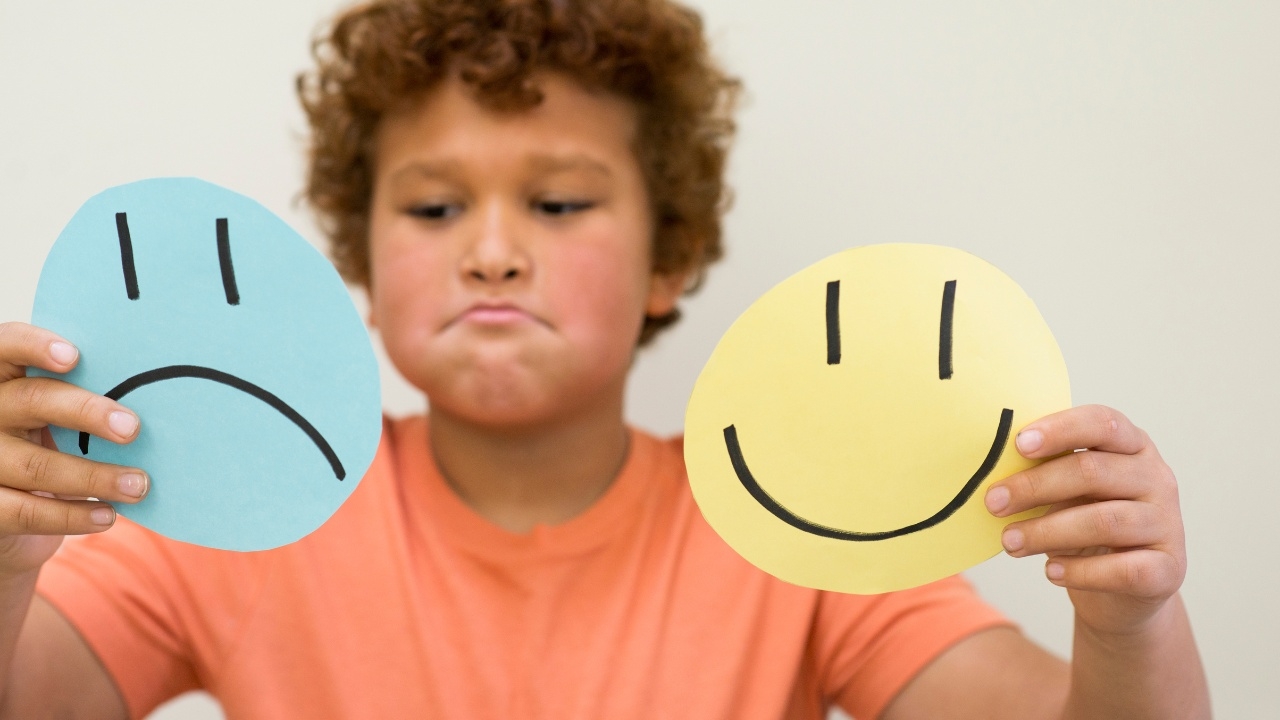
- Encouraging the child to talk about their feelings and name them. For example, if a child feels sad about losing something, they might say, “I'm sad because I lost my favorite toy.”
- Providing models for expressing feelings. You or other adults close to the child can provide models for expressing their feelings correctly. For example, “I feel happy because I saw my friend today.”
- When a child shares their feelings, support and understanding should be provided. You might say, "How do you feel when that happens?" or “What can we do to help you cope with these feelings?”
- Once a child recognizes their feelings, they can be directed toward correct behaviors. For example, if they are angry, they can be taught how to deal with anger positively, such as deep breathing or seeking ways to calm down.
5. Using role-playing techniques to explain the types of feelings and behaviors that accompany them
Role-playing is a powerful tool for teaching children about feelings and the behaviors that accompany them. By presenting different scenarios, children can experience different feelings and understand how to deal with them. Here's how to apply this method:
- Choose different situations that contain a variety of emotions, such as joy, sadness, anger, fear, etc. For example, situations like losing something dear, joy at meeting an old friend, or anger because of a disagreement with a friend.
- Let the children adopt roles and characters in these situations. For example, one person could be a child who has lost something dear.
- After the game, discuss the feelings experienced and the behaviors followed. Ask the children how they felt in these situations and what they did in response.
- Use this opportunity to direct children to positive behaviors that can be followed in such situations, such as expressing sadness or anger correctly by asking for help or talking to a friend or family.
6. Story-telling
Using stories to develop emotional intelligence in children is an effective tool. You can choose stories with messages and lessons about feelings and how to deal with them correctly. Children can understand and learn emotional intelligence skills through the characters' experiences in the stories.
7. Training the child in decision-making skills
This skill helps children make the right decisions based on various factors and available information. The goal is to enable them to think critically and analyze the different options properly before making the final decision. Through this training, the child can develop the ability to plan, think ahead, and deal with their different feelings appropriately.
8. Training the child to take responsibility
This skill teaches children how to take responsibility for their actions, decisions, and the impact of the results on their feelings. They learn to bear the consequences of their actions and act responsibly in various situations. For example, when a child forgets a homework assignment, they are directed to take responsibility and deal with the results by helping them identify the steps needed to correct the mistake, such as talking to the teacher or offering a sincere apology.
9. Training the child to release negative emotions
Training children to release negative emotions means teaching them how to express them healthily and constructively. The goal is to enable them to deal with negative emotions in a way that helps them relieve emotional stress and maintain positive mental health. Here are some of the methods that can be used:
- Encouraging the child to talk about their feelings or write them. They can use journaling to express their feelings.
- Children can express their feelings through drawing or colors. They can draw a picture that expresses anger or sadness.
- Doing exercise or physical activities helps relieve emotional stress and release negative energy.
- Using toys or imaginary characters to represent the feelings and situations the child faces.
10. Setting a good example
This entails providing positive models and correct behaviors for children. Adults set role models for children, who learn by observing and imitating those who display conscious, healthy emotional behaviors. For example, if you are a parent who shows a positive response to feelings and deals kindly and respectfully with others, your child will learn from you how to deal with others similarly.
11. Taking advantage of everyday situations
It is about taking advantage of daily events and different situations that occur in their lives to teach them how to deal with feelings and interact correctly. For example, using moments when a child feels different emotions such as happiness, sadness, anger, and fear to teach them how to express those feelings healthily and appropriately.
12. Praising and encouragement
This method relies on rewarding children for their positive actions or for developing new skills. This type of positive interaction enhances children’s self-confidence and skills.
For example, when a child makes an extra effort to complete a school assignment or shows positive behavior with a friend, praise and encouragement can be given by saying, “Well done, my child. You made a wonderful effort in solving the problem,” or “You were a good friend today. I am proud of you.”
13. Communication with the school
This includes cooperating with the school to promote educational practices that support emotional intelligence in and outside the classroom. Parents can follow the child’s development in the classroom and help solve any problems that might arise. For example, if the child has a problem understanding a particular subject, teachers and parents can work together to provide the necessary support.
In Conclusion
Developing a child’s emotional intelligence is a beautiful journey that carries a lot of love and guidance. When we realize the importance of building this type of intelligence, we form a strong foundation for developing the child’s personality and preparing them to face the emotional challenges in life.
By using appropriate tools such as praise, constant communication, and using daily situations as learning opportunities, we lead them towards a deeper understanding of their feelings and enhance their self-confidence; thus, we can build generations that are emotionally balanced and ready to face life’s challenges with confidence and wisdom.




Add comment