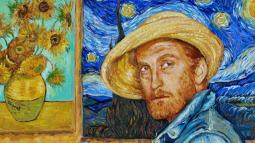



The same is true for life without art, it has no soul. One of the most prominent artists who spread colors and radiance in the world is the artist "Vincent Van Gogh" who is famous for his paintings (Starry Night) and (Sunflowers), although he did not become famous until after his death. In our next article, we will learn more about this great artist, so stay tuned.
Who is "Van Gogh"?
Vincent Van Gogh was an impressionist and moody painter whose works, famous for their beauty, emotion, and color influenced the art world in the twentieth century.
He suffered from a mental illness throughout most of his life and remained poor and unknown until he became very famous after his death.
Van Gogh's family and early life
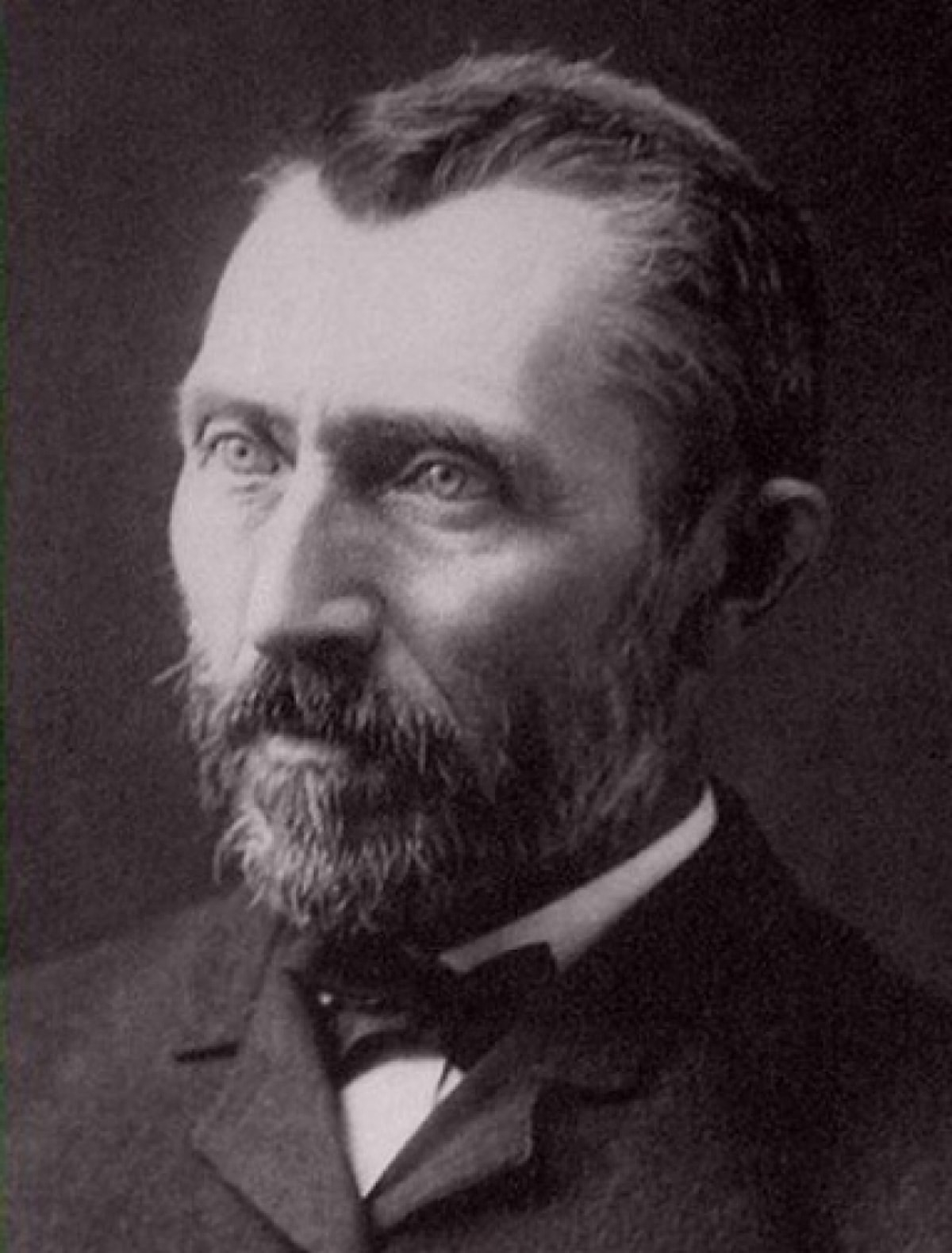
Vincent van Gogh was born on March 30, 1853 AD, in the village of Grote Zundert in the Netherlands. His father, Theodorus Van Gogh, was a strict and difficult rural priest, and his mother, Anna Cornelia Carpentus, was a moody artist. She passed her love of nature, watercolors, and drawing on to her son.
"Van Gogh" was born one year after the birth of his parents' first son, who was also called "Vincent", but he was stillborn. As a result of naming him after his deceased brother and seeing his name placed on his brother's tombstone, "Van Gogh" suffered from sadness and depression throughout his life.
"Theo van Gogh"
Vincent van Gogh was the eldest of six children, three brothers, and three sisters. The boys, Theo, who later worked as an art dealer and supported his older brother's art, Cor, and the girls, Anna, Elizabeth, and Willemian.
Later, Theo Van Gogh played a major role in the life of his older brother and was a strong believer and supporter of him and his art.
Van Gogh and education
When Van Gogh was 15, his family was suffering from severe financial hardship and struggling to secure a living, so Vincent was forced to drop out of school and go to work. He got a job at an art agency owned by his uncle Correlis called Cie & Goupil, an art dealership in The Hague.
By that time, Van Gogh was speaking French, German, and English fluently, in addition to Dutch as his mother tongue.
In June of 1873 AD, Van Gogh was transferred to work at the Groupil Gallery in London, where he fell in love with English culture, visited art galleries in his spare time, and was impressed by the writings of Charles Dickens and George Eliot. He also fell in love with the daughter of the landowner, Eugenie Lauer.
"Van Gogh" suffered from a nervous breakdown and depression after "Eugenie" refused to marry him, and he threw away all his books except the Bible and devoted his life to God. Also, problems occurred between him and his colleagues at work and he got angry with them, and he began asking customers not to buy "art that has no value," as he said until eventually he was fired.
Van Gogh's life as a preacher
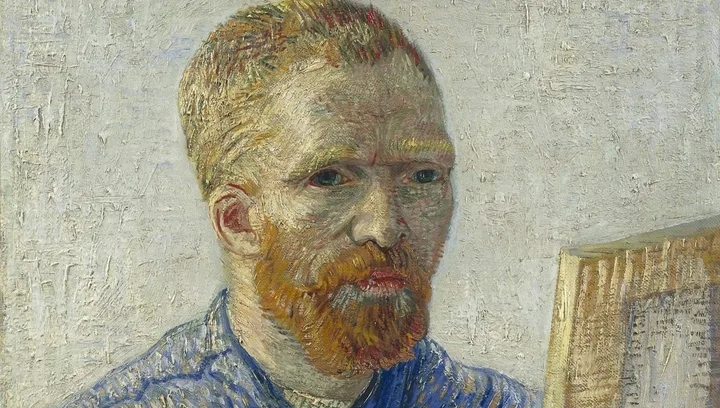
Van Gogh studied at a Methodist school for boys, and he delivered sermons to worshipers in the church, and despite his upbringing in a religious family, he did not begin until a relatively advanced age to think about religion and devoting his life to the church.
He was hoping to become a priest and prepared well for the entrance exam to the seminary in Amsterdam. After a year of diligent study, he refused to take the Latin exams, describing Latin as "a dead language and for the poor". The reason why they prevented him from taking the exam and from accepting him as a priest in the church.
The same thing happened in a church in Belgium in the winter of 1878 AD. As "Van Gogh" volunteered to move to a poor coal mine in southern "Belgium", and this place was a punishment for preachers. As he preached to the people and the sick and served them, and helped the miners. He also drew some pictures for them and their families, and they called him "Christ of the coal mines."
English church committees were not pleased with Van Gogh and his lifestyle as a preacher. As his lifestyle began to take on a martyrdom pattern, they refused to renew the "Van Gogh" contract, and he was forced to search for another profession to earn money from.
Finding solace in art
Van Gogh decided to move to Brussels to become an artist in the fall of 1880, when his brother Theo supported him financially, despite his lack of artistic training. But only out of faith in his brother's talent, after which Van Gogh began to study by himself, reading art books such as (Travaux des Champs) by "Jean-Francois Millet" and (Cours de Dessin) by "Charles Berg".
Art and Van Gogh's involvement in it helped maintain his emotional balance, and by the year 1885 AD, he began working on what was his first masterpiece (Potato Eaters), but his brother, "Theo", who was living in Paris, did not think that the painting would win fame and approval in the French capital, in an era when impressionism became the dominant trend in the art of painting. However, "Van Gogh" decided to move to "Paris" and appeared at the house of "Theo" without an invitation in 1886 AD.
"Van Gogh" saw impressionist art for the first time in "Paris", and the colors inspired him with the lights which overwhelmed him, then he began studying with "Henri de Toulouse-Lautrec" and "Camil Pissarro" and others, and to save money, "Van" and his friends stood for each other while painting instead of hiring models and paying them money. But because of Van Gogh's passion and distinction, he argued with his fellow painters, and this alienated those who had grown weary of his bickering.
The French village of "Arles" and "Van Gogh"
Van Gogh was influenced by Japanese art and began studying eastern philosophy to enhance his art, culture, and life. He dreamed a lot of traveling there, but Toulouse-Lautrec told him that the light in the village of Arles is exactly like the light in Japan.
Therefore, in 1888 AD, Van Gogh took a train to the south of France and moved to a well-known house now called the Yellow House, and spent his money more on colors and drawing supplies than on food.
Van Gogh paintings
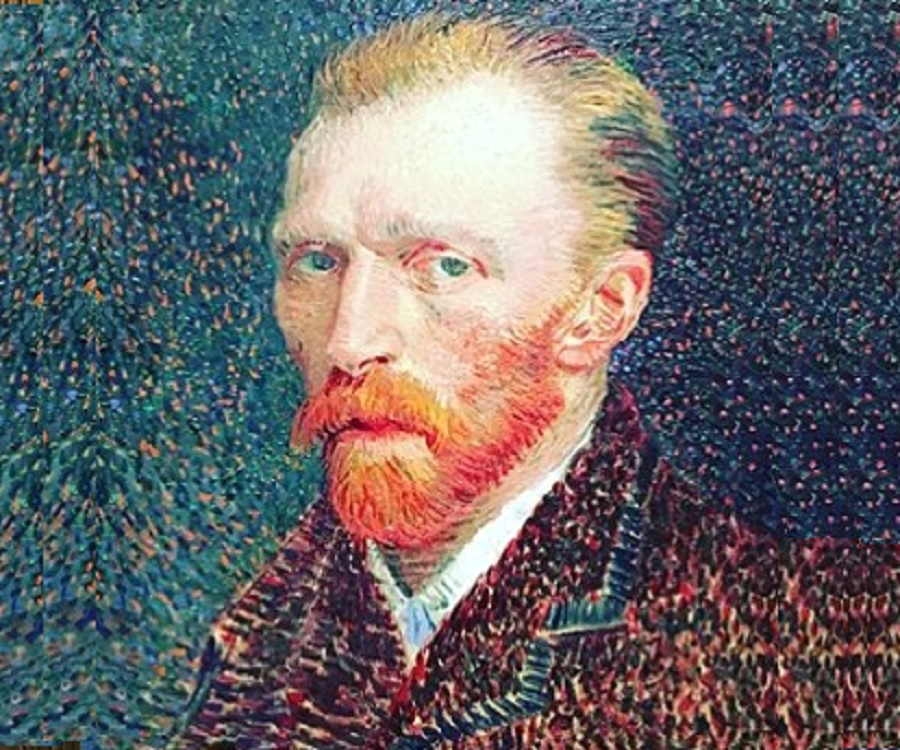
Vincent van Gogh completed more than 2,100 works of art, consisting of 860 oil paintings and more than 1,300 watercolors, in addition to some drawings and sketches, and his paintings are now among the most expensive paintings in the world. His painting "Irises" sold for $53.9 million, and "Portrait of Dr. Gachet" sold for $82.5 million.
The most famous works of art by "Van Gogh" include the following
1. Starry Night
Van Gogh painted his famous painting "The Starry Night" in the orphanage in which he was staying in "Saint-Remy" in "France" in 1889 AD, a year before his death.
A mixture of imagination, memory, and emotion, this oil painting depicts an expressive, swirling starry night sky and a sleepy village, with a large cypress tree resembling a torch, believed to represent the bridge between life and death. The painting is now in the Museum of Modern Art in New York.
2. (SunFlowers) paintings
Van Gogh painted two series of sunflowers while he was in the village of Arles, four of them are between August and September 1888 AD, and one is in January 1889 AD. These oil paintings depict yellow wilting sunflowers in a vase and are currently on display in museums in London, Amsterdam, Tokyo, Munich, and Philadelphia.
3. (Irises) painting
In 1889 AD, after resorting to a sanatorium in "Saint-Remy" in "France", "Van Gogh" began to paint iris flowers in the garden of the sanatorium, and critics believe that the painting was influenced by Japanese woodcuts. The French critic Octave Mirbeau commented, the first owner of the painting and the first supporter of "Van Gogh". "How well he understood the wonderful nature of flowers," he said.
Van Gogh's illness and death
After moving to Arles, Van Gogh suffered from malnutrition. As he only ate bread, coffee, and absinthe, and spent his money on buying colors. It was also said that he drank oil paints and ate paint. Therefore, malnutrition, his suffering from mental illness, and the toxic colors he consumed and was exposed to caused a significant deterioration in his health.
He remained like this until the 27th of July 1890 AD, when he went out to paint in the morning carrying a loaded pistol and shot himself in the chest, but the bullet did not kill him and he was found bleeding in his room.
So Van Gogh was then distracted and apprehensive about his future because his brother “Theo” came to him in May of that year and talked to him about the need to be more frugal and careful in spending money, and here Van Gogh thought that his brother was no longer interested in selling his art.
Van Gogh was taken to a nearby hospital, and the doctors wrote to his brother, Theo, who arrived to find his brother, Vincent, sitting in bed smoking a pipe. They spent the next two days talking together, then Van Gogh asked to take him home. He died on the 29th day, July 1890 AD in his brother's arms at the age of 37.
He died unknown and his works were not appreciated enough, leaving behind an artistic legacy that later became one of the most expensive paintings in the world, and he became considered one of the greatest artists in human history.
In conclusion
In this article, we have talked about the crazy genius "Van Gogh", and we got to know his life, his family, his works, his relationships, his artistic legacy, and his death.


Add comment