



Who is Plato?
- Plato is a great classical Greek philosopher known as Plato, although his original name was Aristocles, son of Ariston.
- He was born in Athens around 428 BC and died in 348 BC.
- He is regarded as one of the greatest philosophers in history and the founder of the Academy in Athens, the first higher education institution in the Western world.
- He established the fundamental ideas of Western philosophy, political science, ethics, logic, and metaphysics.
- He was an instructor of Aristotle and a pupil of Socrates.
- He is famous for his dialogical writing style, with his most notable works being The Republic, The Symposium, and Apology of Socrates.
- According to his theories, there is an ideal world with perfect forms of the things we see in the sensory world.
Plato's Early Life and Childhood
- Plato was born into a noble and wealthy family in Athens.
- His father, Ariston, was a wealthy Athenian and a political leader. His mother, Perictione, was descended from two prominent Athenian legislators, Plutarch and Solon.
- He was raised in a politically and culturally vibrant household with top-notch instruction in philosophy, music, and mathematics.
- Socratic ideas deeply influenced him, and he became one of his most devoted students.
- Plato participated in Athenian political life in his youth and served in the Athenian army during the Athens-Sparta war.
- After Socrates' execution in 399 BC, Plato became disillusioned with Athenian democracy and focused on philosophy.
- He established the Academy in Athens in approximately 387 BC, the first higher education institution in the West.
- The Academy attracted some of the best minds of the time and became a major center for philosophical study and research for over 900 years.
- During his childhood and youth, he laid the groundwork for his philosophy and developed several concepts about justice, knowledge, love, beauty, and government.
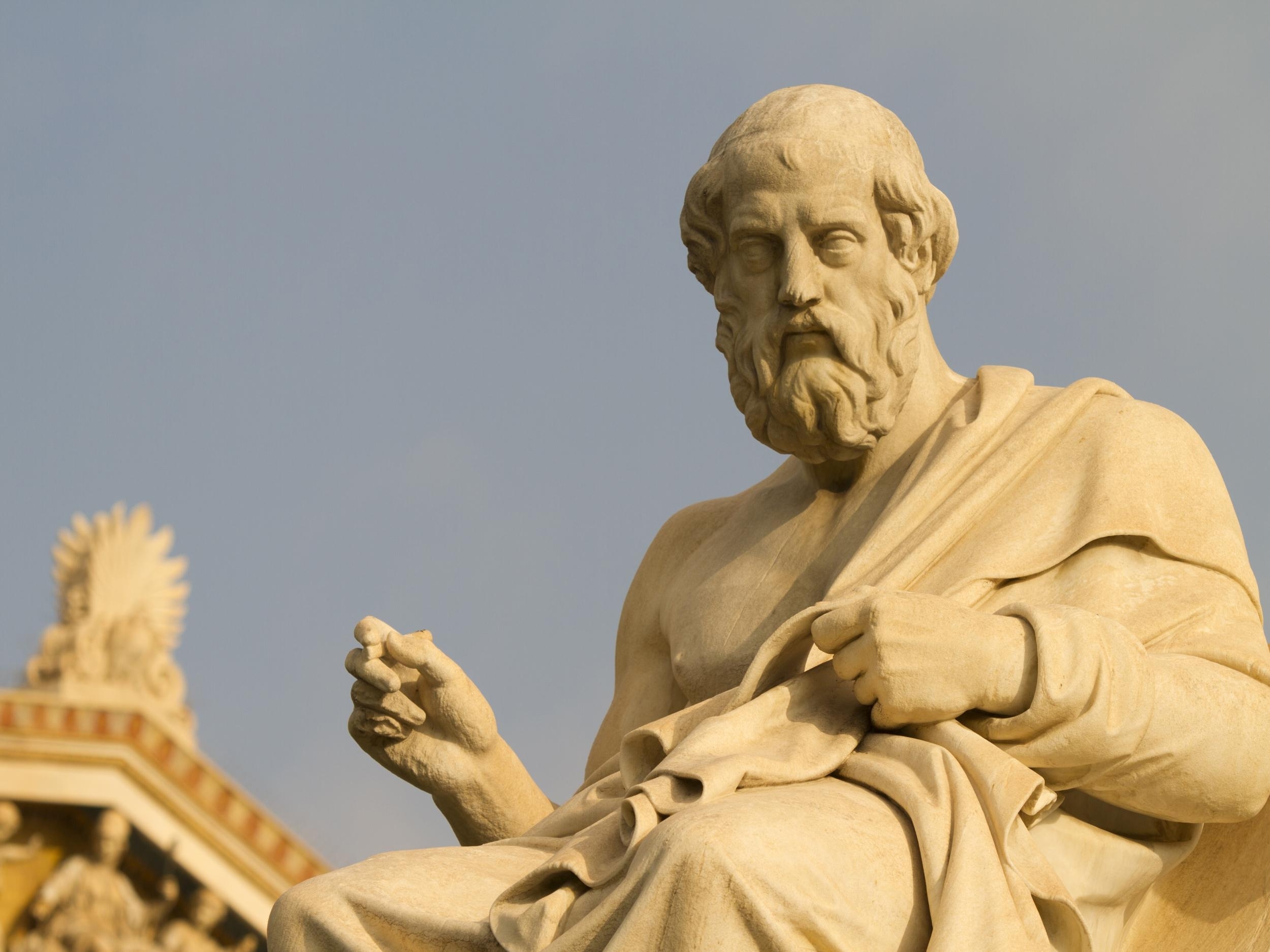
Plato's Biography
- Plato was born into a noble and wealthy family in Athens during the height of Greek civilization.
- He received an excellent education and was profoundly influenced by Socratic ideas, which he adopted from his teacher.
- Plato briefly engaged in Athenian political life. However, after Socrates' execution in 399 BC, he shifted his focus to philosophy.
- He died in Athens in 348 BC at the age of 80.
- Plato is regarded as one of the greatest philosophers in history, and his theories are still studied and debated today.
Plato Professional Biography
Stage I - Spreading Socratic Thoughts (399-387 BC)
- Plato began his cognitive exploration after the death of his mentor Socrates in 399 BC.
- His early writings, such as Apology of Socrates, Protagoras, and Ion, focused on disseminating Socratic philosophy and teachings.
- This stage was characterized by Plato's emphasis on dialogue and discussion, as he sought to understand fundamental ethical concepts such as justice and piety.
Stage II - Formulating Plato's Philosophy (387-360 BC)
- Plato's own concepts began to take shape during this stage.
- His writings, including The Republic, tackled issues of perfect justice and moral governance.
- Plato developed the Theory of Forms, which holds that there is an ideal world full of perfect ideas and that the world we experience is only an imitation of this ideal world.
Stage III - Deepening Ideas and Establishing the Academy (360-348 BC)
- Plato concentrated on developing his philosophy during this time, giving Socrates less of a voice in his dialogues.
- He explored subjects such as metaphysics, the role of art, values, and ethics.
- In 385 BC, he founded the Academy in Athens, which developed into a major center for philosophical learning for several centuries.
Plato's Academy Impact
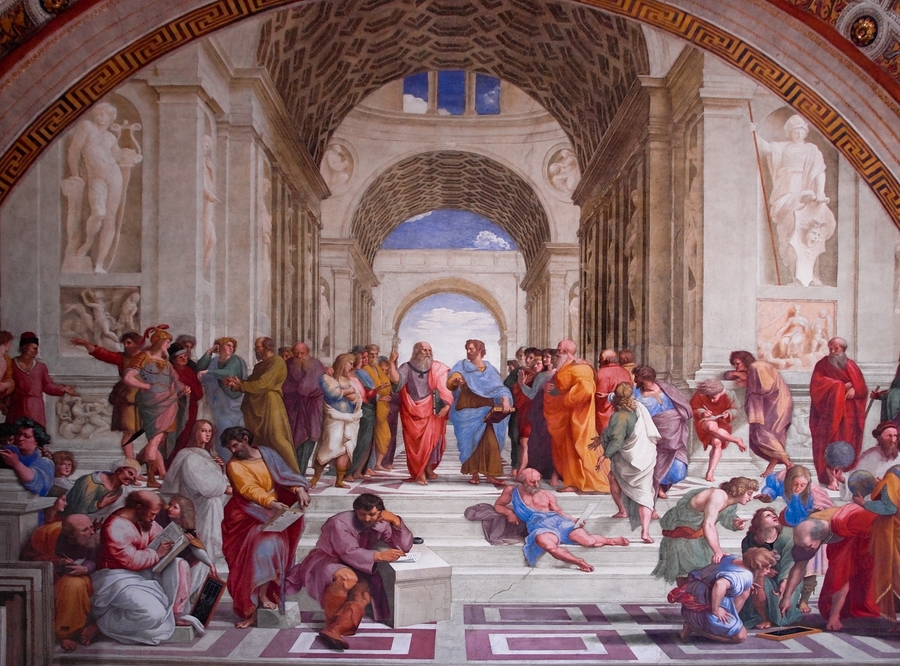
- Plato's Academy played a significant role in shaping Western thought.
- It attracted prominent thinkers worldwide, including Aristotle, who later became one of the most famous philosophers in history.
- The Academy remained active until 529 AD, when it was closed by the Roman Emperor Justinian I.
Plato's Achievements
- He founded the Academy in Athens in 387 BC.
- He created the question-based Socratic method, which is a teaching and philosophical inquiry approach.
- He encouraged students to think critically and develop independent conceptual frameworks for philosophical subjects.
- He wrote philosophical works using a dialogue format.
- He established the fundamental ideas of metaphysics, ethics, logic, and political philosophy.
Challenges Faced by Plato
- He lived in a time filled with political and intellectual turmoil.
- Some of the most significant challenges he faced included the unjust execution of Socrates after he was accused of corrupting the youth and not believing in the gods.
- Plato lived through significant political unrest in Athens, witnessing war, conflict, and instability, which made him aware of democracy's fragility.
- His ideas faced opposition from some of his contemporaries, believing them to be unrealistic and idealistic. Also, he was criticized for his views on women and slavery.
- He encountered challenges in establishing and maintaining the Academy because he had to find funding and attract students.
- He overcame opposition from other philosophers.
Plato's Influence
- Plato profoundly impacted philosophy, religion, politics, literature, art, and several other fields.
- He also influenced global philosophers like Immanuel Kant, René Descartes, and Aristotle.
- Plato's theories about the immortal soul and the forms of the world have influenced religious and philosophical thought.
- His concepts of justice, love, and goodness resonate in most religions.
- Many authors, poets, and artists have found inspiration in his philosophical writings.
- Schools and colleges still use his dialogue-based teaching approach today.
Plato's Top Quotes
- “The greatest pains are those we cannot speak of, and the doctor cannot diagnose.”
- “The struggle against oneself is very strong, and courage lies in restraining oneself from desires.”
- “Few sins and transgressions double your mental health, and eating less doubles your physical health.”
- “Injustice itself is a dilemma, but worse than that is when the oppressor does not taste the bitterness of his oppression.”
- “Be kind, for everyone you meet is fighting a harder battle.”
- “Injustice itself is a dilemma, but worse than that is when the oppressor does not taste the bitterness of his oppression.”
- “Mental health and self-respect grant dignity in its highest form.”
- “Friendship with an evil person will make you evil without your consent.”
- “Chastity truly means fighting oneself and resisting the temptations and desires it whispers to you.”
- “A righteous person who sets and adheres to his own laws is a balanced human being, while a corrupt person invents tricks to bypass the law. The right behavior is your paved path to excellence, for excellence does not come as a gift but through training and development.”
- “Wise men talk because they have something to say; fools, because they have to say something.”
- “There is a fierce desire for savagery and lawlessness within all of us.”
- “Opinion reveals the level of knowledge and ignorance of its owner.”
- “Men in this life are between the love of wisdom, the love of money, and the love of honor.”
- “Self-resistance and overcoming it is a victory in itself and the highest level of nobility.”
- “Exaggeration in anything will yield the exact opposite.”
- “Your good deeds are the foundation of your strength and a positive motivation for others to do them.”
- “Men reveal their strength by harnessing it.”
- “Human behavior is based on knowledge, desire, and emotion.”
- “Beware of discouraging others who continue to progress, no matter how slow the pace of progress.”
- “Fatigue in the path of goodness is beautiful; surely the fatigue will fade, and only goodness will remain.”
- “The righteousness of men lies in enduring harm and not committing it, no matter the cost.”
- “The rule of a single individual is, in the broadest sense of the word, called monarchy. If practiced justly and for the public good, it is called monarchy; if practiced for the ruler's private interest, it is called tyranny. The rule of a few or an elite, if practiced for the public good and by the best and according to virtue, is called an aristocracy. But if practiced by the wealthy and affluent, it is called oligarchy and is considered a corrupt and deviant form. The rule of the majority, if for the public good, is called a moderate republic. However, the rule of the poor majority, aimed at serving only the poor, is called democracy and is considered a corrupt and deviant form. Thus, democracy, oligarchy, and tyranny are three forms of government that do not seek the public benefit.”
Plato's Awards and Honors
Plato did not have any official awards or honors in the modern sense because this concept did not exist in his time. Nevertheless, his ideas and achievements made him one of the most well-known and respected philosophers in human history.
Unknown Facts About Plato
1. He Was an Excellent Mathematician
Plato excelled in mathematics and had a great interest in geometry. He is credited with solving the cubic duplication problem.
2. He Was a Wrestler
Plato was an athlete when he was younger and competed in the Olympics.
3. He Was a Vegetarian
Plato was a monotheist and is believed to have been a vegetarian.
4. He Believed in Romantic Love
Plato wrote about love in several of his works, believing in love based on virtue rather than physical attraction. Some accounts suggest he was homosexual, explaining his aversion to marriage.
5. He Was Influenced by Eastern Cultures
Plato traveled to Egypt and Persia and was influenced by Eastern philosophies and cultures.
6. He Was a Playwright
Not many of the plays that Plato penned in his early years survive.
7. He Had a Sense of Humor
Despite his reputation as a serious philosopher, Plato had a sense of humor and used irony in some of his works.
8. He Influenced Christianity
Plato's theories regarding the soul and the afterlife have greatly influenced Christian thought.
رهف بليدي



Add comment