


The role played by the management in all types of organizations and institutions is the one that judges whether they succeed or fail. It is the actual engine that exercises the planning, organizing, directing, and controlling processes that make the organization work efficiently to achieve the goals it aspires to.
Planning represents the first function of management functions, whose success depends on the success of other management functions. Planning is responsible for defining the desired goals to be accomplished in light of human and material capabilities and then developing programs to achieve them.
Planning in the educational sector is an integral part of general planning; rather, it is an important area of its field and a base for it. Educational planning is concerned with an important segment of society on which the economic, social, and development structure is based; hence, it plays a prominent role in the development of society and the development of its human resources.
Therefore, educational leaders must pay attention to educational planning in order to draw up and develop future educational and educational policies and then use effective planning to develop appropriate programs for their implementation.
The concept of educational planning
Educational planning is the basis of the educational process, as it defines goals, clarifies them, and defines the stages of work to reach them; thus, it distances the educational process from randomness and chaos and opens the way for the educational leadership to make decisions based on accurate information, facts, and data.
Educational planning is the one that can harmonize between the needs of the learners and the requirements of the era.
Educational planning, as stated in the book Educational Administration and Educational Planning by "Abdullah Al-Jawad" in 2004, is the process of drawing up a set of educational projects aimed at taking care of the educational, technical and teaching process, and invest efforts in it to the maximum extent, provided that planning achieves the goals of the state and is in line with the desired development and includes implementation steps and is based on reality and within the limits of capabilities, and is supported by statistics, models and examples, and treatment of problems with realistic solutions that are appropriate to the capabilities and keep pace with the foundations and goals of society.
Al-Rifai also defined it as a comprehensive and integrated view of all education problems and drawing up educational policy in all its forms based on a comprehensive knowledge of the population conditions of society, the conditions of the labor force, and the economic and social conditions.
Coombs defines it as a process of applying rational systemic analysis to the path of educational development with the aim of making education more effective in achieving the needs and goals of learners and society.
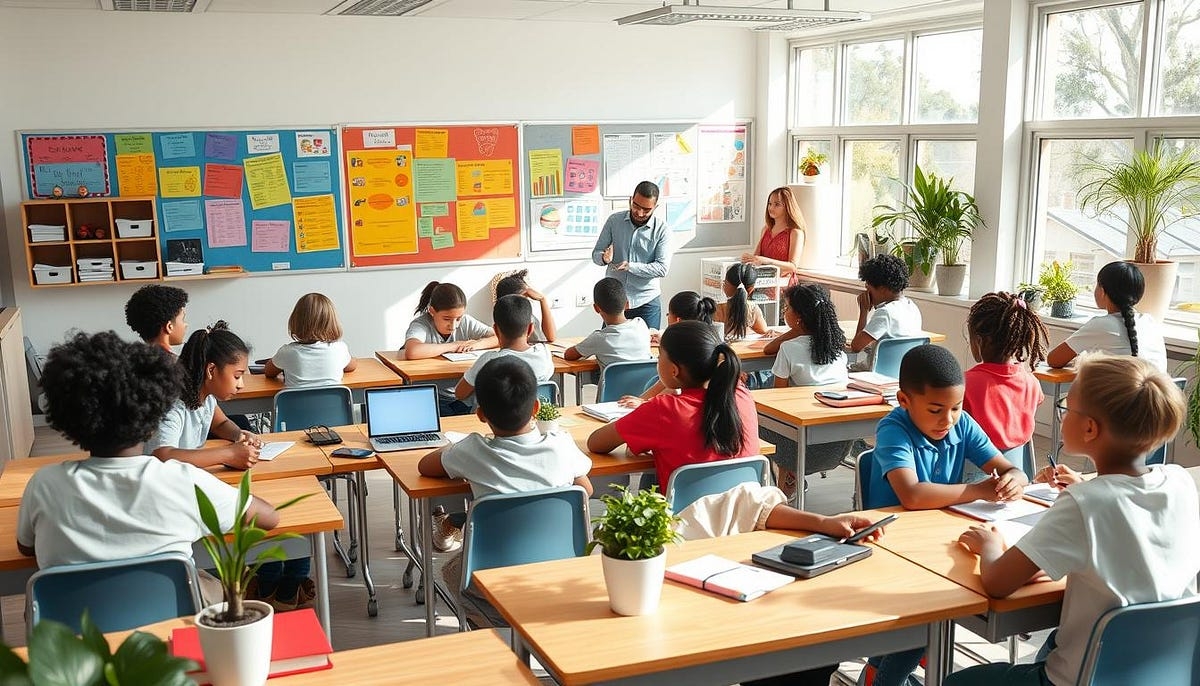
Educational Planning Goals
- Determining the goals to be reached and clarifying them for all workers in the educational sector, in addition to defining the programs that can be achieved.
- Optimal investment of available material and human resources.
- Providing educational opportunities for all and realizing the principle of equal opportunities in the field of education.
- Achieving a balance between the educational outputs of qualified human resources and the needs of economic and social development in the short and long term.
- Seeking to preserve the heritage of the ancestors by including the heritage in educational curricula and activities.
- Raising good citizens and preserving the state and its components.
- Every individual obtains a kind of education that enables them to develop their personality, achieve competence, and assist them in their life path.
- Increase cooperation between individuals in the community and between the local community and other communities.
- Increasing the efficiency of individuals to face the problems they may face in their lives.
- Clarifying the course of the educational process.
- Activating scientific research, benefiting from technological progress, and keeping abreast of global developments in all fields.
- Coordination and rationalization of spending on education.
- Addressing unemployment problems.

Areas of Educational Planning
1. Educational administration
Planning is an essential function of the elements of planning, as it works to avoid management problems and push them towards achieving the goals of administrative work.
2. Educational curricula
The process of preparing the curricula includes a wide range of plans, the aim of which is first and foremost to reflect the culture of society and achieve its goals. Therefore, curriculum planning must be carried out after conducting a clear reading of the society’s philosophy, analyzing it in depth, formulating realistic and achievable goals, measuring and studying the structure of the society, its members, the conditions of pupils and students in it, and organizing the programs and activities that can be offered to them.
3. Teachers
The success of educational plans depends on the competence of teachers and their ability to implement them. Therefore, the teacher preparation period is one of the most important things that educational planners should think about.
4. Students
The first goal of planning is to prepare a good citizen who is able to build and develop society. Therefore, planning must start with studying the members of society and their needs and tendencies so that the plans can monitor what they want and train them in a way that achieves their ambition and the goals of society at the same time.
Types of Educational Planning
1. Educational planning based on geographical planning points
Planning here takes place either at the level of the whole country or at the level of a specific province or region.
2. Educational planning according to the time frame
- Short-term planning: planning is done here for a period of less than a year, and it is often tactical or operational.
- Medium-term planning: planning here takes place for a period of less than 5 years.
- Long-term planning: planning is done here for a period of more than five years.
3. Educational Planning according to the level of supervision
- Central Planning: Decisions and plans are issued by the central educational leadership.
- Decentralized planning: gives authority to geographical regions to take decisions and develop plans.
4. Educational planning according to its comprehensiveness
- Comprehensive plans: plans in which all components of the educational process are planned.
- Partial plans: Specific programs are planned here, such as planning for adult education only, early childhood plans, school building plans, and sports program plans.

Principles of Educational Planning
1. The principle of Inclusion
Planning should include the entire educational sector, identify its problems, fully determine its material and human capabilities, and analyze the relationship between the parts and components of the educational process.
2. Principle of Reality
Educational planning must start by reading the reality of society and monitoring its basic needs so that it can provide the human resources that society needs for its progress and development.
3. Flexibility Principle
Educational planning aims to anticipate the future in light of the needs of reality, but today we live in a world of rapid development and a lot of change. Therefore, educational planning must be flexible so that it can adapt to those variables that may occur.
4. Continuity Principle
Educational planning works to keep pace with the changes taking place in society and develop plans that suit them. It is continuous and uninterrupted planning. The stages are linked to each other.
5. Sharing Principle
Education is the right of all citizens, so making plans should not be the monopoly of one person. Rather, planning must be the responsibility of all workers in the educational sector, and everyone must participate in it as well.
6. Coordination Principle
It means coordinating all efforts and activities and directing them towards achieving the desirable goals, and the aim is to avoid chaos, duplication, and conflict of tasks.
7. Principle of Complementarity
There must be an integration between the programs and activities laid out in the educational plans so that they contribute to each other in achieving the set educational goals.
8. Data Availability Principle
Educational planning must take place in light of the actual needs of the community. Therefore, its most important principles are the availability, honesty, and realism of data. The information must be accurate so that planning can fulfill its purpose and achieve what the educational leadership aspires to.
9. Principle of centralization of planning
The educational leadership, represented by the Central Agency for Planning, must develop the comprehensive educational plan for the educational sector in its final form so that it takes on official status and everyone works to implement it.
10. Principle of decentralization of implementation
Each educational authority must implement its part of the plan according to the goals and time set for it.
11. Mandatory Principle
When the plan is approved by the educational leadership, it becomes formal and binding. Everyone must work to achieve the plan without resorting to improvisation or changing it.
12. The principle of assessment and follow-up
Assessment is a process inherent to any plan to ensure good progress towards achieving the goal and to know the obstacles that it may face that may limit its success.
In conclusion
The ideal state is one that makes education its most important function. This is because if the education of the citizens is correct, they can easily contemplate the realities inherent in the world of the spirit. Educational planning is a feature of contemporary, civilized, and refined life in any society.
The educational planning process is not an easy one, as it requires clear educational visions, fertile imagination, and advanced skills in collecting and analyzing data and finding the link between them to make the appropriate decision. It is an interlocking administrative process that includes research, discussion, and decision-making to achieve goals and make progress in all fields.




Add comment