



Vision boards can be a captivating and effective tool for clarifying and energising your goals. However, despite their widespread adoption, many people encounter challenges in effectively utilising them.
Given the divergent views on this topic, let's explore how to create a vision board properly. We'll delve into the reasons why some individuals struggle to create impactful vision boards, highlight their potential shortcomings, and offer insights into crafting a vision board that truly inspires you to pursue your future aspirations and objectives.
Why Do Certain Individuals Struggle To Utilize Vision Boards Effectively?
Before delving into the mechanics of creating a vision board, it's crucial to understand why many people struggle with this practice. Despite its recent surge in popularity, there are valuable insights to glean from both successful and unsuccessful attempts.
In essence, the stumbling block for some individuals regarding vision boards often lies in their approach. Consider this scenario: you're scrolling through Facebook and come across images of friends enjoying a lavish vacation. Suddenly, you feel compelled to include a similar getaway on your vision board.
While this may seem appealing initially, it might not align with your true priorities. While a vacation can certainly enrich your life, it shouldn't be the sole focus of your aspirations.
Moreover, vision boards may falter if you're not actively working towards your goals or if you harbour doubts about your ability to achieve them.
These challenges mirror those encountered in goal setting and planning, but it's precisely this similarity that can pave the way for success in creating and utilising a vision board effectively both now and in the future.
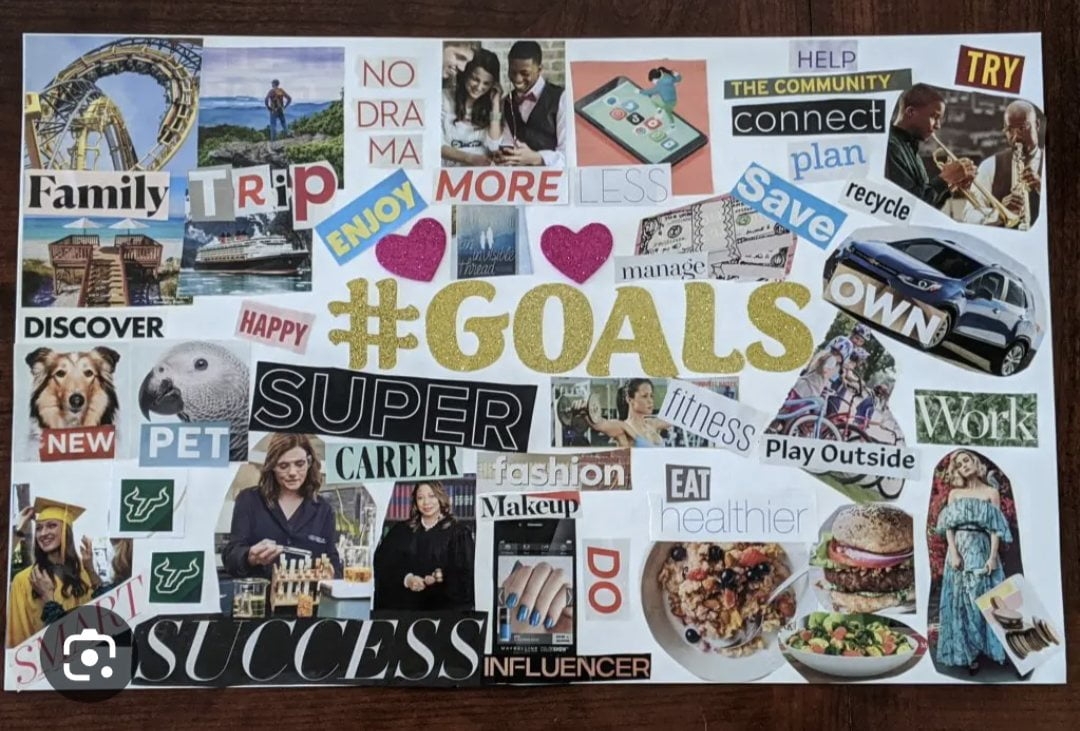
How to Create A Vision Board?
Creating a vision board is a wonderfully straightforward endeavour. You only need a few supplies and a designated space to bring it to life. Here's a comprehensive list of what you'll need to craft an inspiring vision board:
1. Board
This is the primary item you'll require. You are free to shape this board according to your preference, whether it's a wooden board, a piece of foam, a poster, or even a virtual board you create on your computer.
2. Supplies Needed for Crafting a Vision Board
If you decide against creating a digital board, you'll require materials to affix items onto the board. This entails having scissors, pins, glue, tape, and similar essentials at hand. To infuse more vitality into your board, consider incorporating markers and stickers for an extra touch of vibrancy.
3. Images
You can cut out some inspiring images or quotes from magazines. As for those who prefer digital boards, you can simply find suitable images online, copy and paste them, and organise them however you prefer.
4. Time
Creating a vision board typically requires at least an hour or two, so ensure you have ample time to do so without interruptions. If this board relates to your work goals, set aside some time between your tasks. It's wise to minimise distractions as much as possible, so play calming music, close your office door, and allow your creativity to flow.

How to Make Vision Boards: An Effective and Inspirational Method for Achieving Your Goals?
While creating a vision board may seem simple, what truly matters is ensuring that it becomes an effective and inspiring method for you to achieve your goals. It's important to ensure that this effort benefits you so that your time and energy are not wasted in vain. We'll provide you with some tips that may help you achieve this before and after creating your vision board:
1. Reflect On Recent Accomplishments
The first piece of advice emphasises reflecting on your achievements in the past few years. Despite the rapid passage of days and years, which often leaves us unaware of our accomplishments, you may be surprised by what you've attained during that time.
Take a deliberate and thoughtful approach to considering everything you've accomplished so far in your life's journey. Recall the moments that have filled you with pride at each stage. This mindset enables you to focus on areas of improvement in your life as you move forward. By doing so, you won't dwell on adding desires imposed by others but rather on your aspirations and what truly holds significance for you.
2. Set A Clear And Defined Goal
Perhaps this question, "Where do you see yourself in five years?" might be intimidating in any job interview, but it's certainly a valuable question to ask yourself when setting your goals.
Reflect on the trajectory of your life and ask yourself if you're satisfied with it. This introspection is crucial because we all possess the capacity to shape our lives yet often overlook the opportunity to steer them in the direction we desire.
When crafting a vision board for your future, you'll establish goals that should remain relatively consistent. However, this question may influence how you construct the inspirational vision board you aim for.
It's essential to emphasise that your vision board will encapsulate your aspirations and objectives rather than allowing external circumstances or opinions to sway your goals and alter the course of your life.
3. Consider What You Want to Change
Your goals should be incremental, addressing something lacking in each stage of life. Perhaps you're burdened by frequent relocations due to not having a permanent home, or maybe you've been refining a business idea for a while and are eager to implement it to enhance your ventures. Whatever it is you desire, contemplate what's missing and how you can acquire the resources to make it a reality in your life.
The previous advice helps narrow your future vision and pinpoint the type of improvement you seek to make in your life. This way, you can focus on what truly matters to you and what you genuinely want to change.
4. Avoid Overloading Your Vision Board With Goals
Now that you've identified the goals you're aiming for, the next step is transforming them into visions. While including numerous goals on your vision board is tempting, this approach may not be the most effective.
Pursuing too many simultaneously can be exhausting unless you're adept at focusing on goals sequentially. While enthusiasm is common, it's important to recognise that it often stems from a dopamine rush, driving our excitement and motivation.
Chasing too many goals at once can mimic a drug-induced sense of satisfaction, potentially leading to addiction. It may also blind us to the point where mere reality can induce stress or fatigue.

Therefore, as you assemble your vision board, consider adding alternatives stimulating and inspiring you toward achieving your goals. Here are some tips to help:
- Incorporate motivational quotes or phrases that ignite your passion.
- Utilise sticky notes to jot down actionable steps toward specific visions.
- Opt for a smaller board or enlarge the images you use, encouraging you to include fewer items and focus on the visions that truly resonate with you.
5. Let Your Vision Reflect Your Emotions
While setting goals and altering your mindset towards them is crucial, it's equally important to recognise the emotional and psychological aspects tied to these goals.
To underscore this point, ensure that each action you take is rooted in an emotion or psychological element that deeply resonates with you. As you craft your vision board and explore its intricacies, posing certain questions to unveil and comprehend these emotions is helpful.
Consider asking yourself, "Why do I aspire to achieve this particular goal?"
This question delves into uncovering a profound personal purpose, which may include sentiments like:
- "I want to prioritise spending quality time with my partner because our bond means everything to me, and I've been neglecting it lately."
- "Improving my fitness and shedding excess weight is driven by the desire to alleviate chronic back pain, which has been hindering my daily life."
- "Embarking on a business venture stems from a newfound ambition to pursue entrepreneurship, a dream I shelved in my younger years."
Finding a genuine motivation behind your goals is a constant beacon, reminding you of what truly matters in your life. This provides a compelling reason and instils a sense of purpose. With goals deeply rooted in personal significance, you'll naturally become more invested in the journey, honing your skills and determination to turn them into reality.
In Conclusion
Vision boards are a potent mental exercise demanding profound self-reflection and emotional investment. If you're not truly committed to this process, it may not yield substantial benefits for you.
Too often, vision boards devolve into mere collections of images or artistic endeavours that fail to capture people's genuine desires. To ensure the success of this method in your goal pursuit, infuse it with your emotions and aspirations. Adapt your thinking to align with your future visions.
By imbuing your vision board with personal sentiments and crafting it to reflect your aspirations, you'll discover it to be an invaluable tool in your journey toward achieving your goals.




Add comment