


Since effective communication between the teacher and the student is crucial to the educational process, the teacher makes a great effort to establish a healthy relationship with their students that is based on love, trust, and respect.
It is well known that if the teacher cannot win the student's hearts and earn their trust, the student will not be able to express themselves properly or interact positively with them.
Teachers have a significant influence on our kids' souls, especially in the early years of school. Most teachers also require assistance in being placed at the track beginning. Therefore, we will present this article to help you in your quest to win your students' trust.
The basic qualities that you must possess as a teacher
We must briefly discuss the basic personal qualities a teacher must possess in general before discussing the qualities that a teacher must possess and the behaviors and practices they must engage in to win their students' trust. These qualities form a solid foundation for them, and with them, their quest to win their students' hearts will be more challenging and possible. These elements are:
- Safety of the senses.
- Emotional stability.
- Psychological health.
- A sincere inclination toward the teaching profession. You should decide to become a teacher because you believe in the nobility and greatness of this profession. When unqualified and unwilling individuals enter this profession, there are, unfortunately, very serious consequences that could affect an entire generation.
If you are weak, highly sensitive, irritable, anxious, or afraid, you should work to overcome these qualities as soon as possible. Otherwise, you won't stand out as a teacher, and you won't be able to connect with your students. Because of the nature of the profession, teachers must be able to interact with various students, which requires an integrated personality.
Therefore, the teacher must possess the following qualifications:
- Mastery of the scientific material they present.
- Self-confidence.
- Accepting criticism.
- Patience and high flexibility that qualifies them to deal with different types of personalities.
- Jovial, fun, and loving.
- Being realistic and far from excessive idealism in their actions.
The previous factors help to facilitate the teacher's work and facilitate their access to their students' hearts, which increases the possibility that their instructions will be accepted and followed. Make sure you meet these qualifications if you are a new teacher.
Before entering the classroom, you must work to develop any areas where you feel you are lacking quickly. Remember that your first encounter with your students is very important, as the students will form their initial perception of you through it. So, try your best to make a good first impression.

How do you make a good first impression on your students?
You can follow the following tips to leave a positive first impression on your students:
1. Introduce yourself to the students
Make sure to introduce yourself to the students and share some background information with them first. Depending on the student's age group, these details will vary. You could inform them of your family situation, your area of academic specialization, and other simple details.
By taking this step, you can transform from being an enigma to someone they are familiar with, which will bring them closer to you and make them feel safe.
2. Get to know each student's name individually
After you introduce yourself, get to know each student's name individually and ask them some questions, such as where they live or how many siblings they have. This step helps to break the ice and allows each student to express themselves. If you recognize a student's family, it is preferable to avoid mentioning this in class to prevent provoking sensitivity among the students.
3. Do not be serious all the time
Some teachers believe it is preferable to be entirely serious during the first encounter. However, this is incorrect because it will hurt some students and require additional effort to regain their trust. Therefore, a gentle smile in the first meeting with your students would relieve their tension, especially young ones.
4. Pay attention to the students
For example, you should never ignore a crying child or treat them harshly if they ask for their parents; instead, you should try any possible way to win their trust. You can give them a task, let them explain why they're crying, or invite them to participate in a group activity.
5. Explain the general rules
Explain the general rules you and the students will follow throughout the school year during the first encounter. It is preferable to establish these rules with the students so that they recognize the value of their participation and opinions right away.
6. You are a role model for every student
Remember that you are more than just a repository of knowledge; you are also a role model for every student. Since a significant portion of your student's behavior will be shaped through you and your practices and methods of dealing with them, the moral aspect of your formation must come before any other aspect.

The most important practices that a teacher must do to win their students’ trust
The teacher must put a lot of effort into creating a healthy learning environment for their students and preparing the circumstances and conditions to support the development of each student's unique potential and abilities.
If the student does not feel secure with their teacher, this cannot be accomplished. So keep in mind that most of your efforts will only be worthwhile if you win the hearts and trust of your students. Here, we'll present the key practices a teacher must do to win their students' trust:
The student needs both freedom and discipline simultaneously to achieve the best growth in all aspects. The classroom will turn into a courtroom if the teacher turns into a mere judge carrying a list of prohibitions and penalties, waiting for any mistake from the students to pass judgment on them.
In this scenario, the students will be unable to interact and communicate with their teacher effectively because they will be constantly afraid and anxious. Any teacher may think, "How do I create this balance of freedom and discipline?" First, we as teachers must acknowledge that too much freedom will inevitably result in chaos, so this freedom must be organized and controlled within a set of rules that apply to all students in the classroom.
These rules will protect the students because they know they have complete freedom within these limits and that if they violate the rule, they will receive a penalty that suits the violation. This applies to all students in the class without distinguishing between them for any reason. Remember that the first step in earning your students' trust is to promote justice among them.
Teachers must pledge to care for their students through their actions and practices inside and outside the classroom. It is very important for the student to feel safe in their teacher's presence. It is very improper for the teacher to turn into a source of anxiety and fear for their students. When students feel safe with their teacher, they will never hesitate to resort to them if they make a mistake.
For example, it would be normal for a student to tell their teacher if they accidentally broke the window without fear. However, the students will be afraid and make up lies to defend themselves if the relationship with the teacher and is based on fear.
You should satisfy your students when they resort to you. They may turn to you when they are experiencing difficult situations or problems at home or school. Therefore, you must be worthy of their trust, be the best advisor and guide for them, and treat them as your children. Doing so will improve your relationship with them and increase their trust in you.
The teacher must also focus on all of how they interact with the students, accepting them for who they are while also being aware of their abilities, strengths, and weaknesses. Each attempt to develop and improve them must be controlled and organized to achieve real results. Thus, the teacher knows exactly the tasks they will assign to them in a way that neither undermines their self-esteem nor places an extra burden on them, causing them to turn away from the school and the teacher.
The teacher must represent the democratic leadership in the class, thus producing cooperative behavior patterns. The students will naturally love participation and tend to work if they are involved in making decisions in any situation in the classroom. They will also learn how to respect the opinions and ideas of others and even work with them to achieve their ideas.
On the other hand, a child who attends a strict school will reject any knowledge or experience that is presented to them because they will feel oppressed and that everything is being forced upon them, which makes them lose enthusiasm to implement it.
The teacher must never abandon their moral authority under any circumstances. Furthermore, they must never engage in abusive physical violence, defamation, slander, or insults. Such actions damage their reputation in front of their students and cause them to lose their impolite students' trust.
No matter how hard the student tries to provoke the teacher, the punishment must remain within its educational framework. It is important to avoid turning the punishment into a personal vendetta because doing so could lead to unintended reactions like revenge. How often have we heard about students who ambushed their teachers to take revenge after the latter's humiliation of them in class? How often have we heard someone claim they never got over that slap?
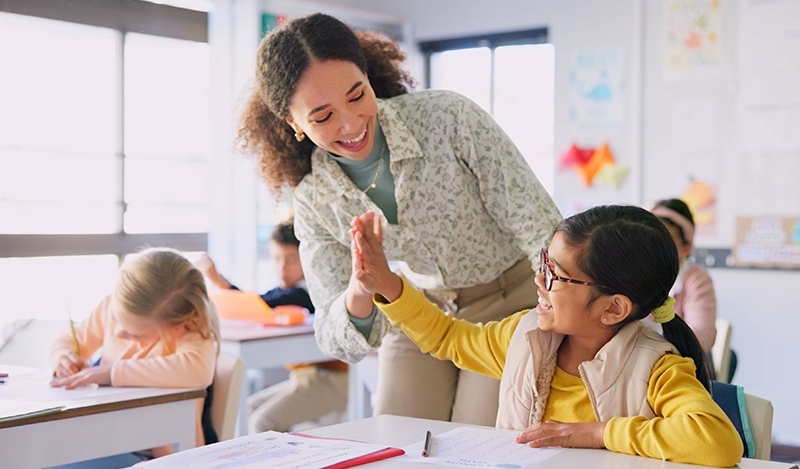
I remember reading in an educational article that the definition of a disciplined and systematic teacher is "The individual educator who transfers children from terror to security." Therefore, discipline does not mean violence or unjustified cruelty, as it must involve an educational corrective aspect only.
Real contact with your students needs to be encouraged, even outside of the classroom. This would strengthen your friendship and mutual trust with them and transform the relationship into a parental relationship in which you work to give everything you have to your students, who have become like your children. In return, the students put all their effort into pleasing their teacher to win their love.
For example, in Japan, teachers are keen to visit their students at least once a year in their homes. Despite the significant changes that have affected Japanese society and its systems, this tradition is still practiced today.
This behavior is based on the educational belief that teachers can understand their students better when they know their circumstances and ways of living. So, it is evident that the aim of education is not only about imparting knowledge to students, as it should be a real building process for the human being, and the teacher should be aware of that.
In conclusion
This article demonstrates the significant impact teachers have on their students' souls. Thus, the teacher's first goal must be to make this impact as positive as possible, which will only be achieved if the teacher can win the students' trust and love.
The teacher must adore their students and have faith in their abilities and their right to get the highest quality education. Only by doing this can they improve communication with the students and steer it in a direction that gives them the security they need to express themselves in the best way.


Add comment