7 Tips to Follow the Pomodoro Technique to Boost Productivity
Are you one of those people who spends most of their day in their office? Who finds it hard to focus all day? There is a simple solution to improving your productivity and focus, which is the Pomodoro Technique.
Note: This article is taken from the blogger Darius Foroux, in which he tells us about the Pomodoro technique.
It is natural to have a desire to improve your productivity. For example, with regard to machines, it is obvious: You can make them faster and better every day, but what about your personal productivity?
I've read many books on productivity; I've read countless articles on time management; and I've tried different ways to increase my productivity. I want to get more things done in the same amount of time, and I'm not looking for shortcuts or tricks to do less work. Because I never mind working.
But what I don't like is the feeling of wasting time on meaningless things. Sometimes, I might start watching one video on YouTube, then two hours pass without realizing it, and then I get frustrated with YouTube, but this is illogical. YouTube has nothing to do with it; it is about me. But I've found a way to take that frustration out, making work more fun and less stressful.
Use the Pomodoro technique and take a 5-minute break after every 25 minutes of work
The reason for the success of this method is very simple, and it is evolutionary biology. The human mind cannot focus on a single task for long periods of time because our brains are designed to ensure our survival and protect us from imminent threats. The brain is constantly on alert.
So focusing on one thing for a long time is hard on your mind.
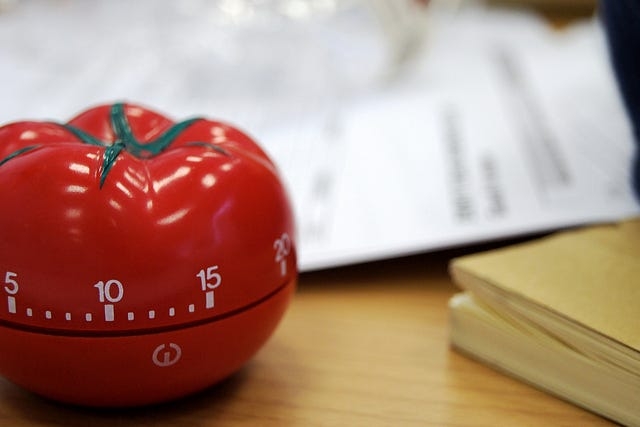
Research conducted by psychology professor Alejandro Lleras at the University of Illinois shows that stopping work for a certain period and then continuing to work for another period allows us to maintain focus. When you complete long tasks, such as studying for exams, submitting presentations, or writing reports, it's best to take short, structured breaks.
Taking structured breaks also increases the quality of your work. When you take a break, you force yourself to take a few seconds to reevaluate what you are doing. Sometimes you may find that you have to make an adjustment to increase the quality of your work. Conversely, when you work on a task without Taking any breaks, it's easy to lose focus and get lost in work.
This is why 5-minute breaks are as important as 25 minutes of work. So take your breaks seriously and treat them as a reward.
Use your break to go for a walk, do some stretches, grab a cup of coffee, or do something relaxing for you, and feel good about the work you've done.
For me, I started working out in 25-minute blocks years ago. As I get a lot of work done in them, I also find that working this way is more enjoyable and less stressful. I have tried breaks for different periods (25, 30, and 40 minutes), and I have reached the maximum of 45 minutes.
Some research shows that it is not helpful to focus for long periods of time. So you can experiment with how long you prefer to work before taking any breaks.
If you'd like to try the Pomodoro Technique, here are some other tips that can help:
- Use an app to set up 25-minute time slots.
- Assign only one task per 25-minute slot.
- Don't skip breaks.
- Don't check your email during your breaks.
- Take a 15-minute break after every four slots.
- Don't accept interruptions or false emergencies during your 25-minute slot.
- Set a daily goal, for example, to work in 12- to 25-minute slots, totaling 300 minutes of productive work.
In conclusion
It's easy to forget the importance of taking breaks, and you don't need to read another article about productivity; just take a break instead. Sometimes we may get lost in lists and productivity-related tricks, but the truth is that no matter what you do to improve your productivity, you still have to do the work; so you may need to take a 5-minute break to recharge.